On June 19, 1916, while Europe was engulfed in the chaos of World War I, Franz Kafka wrote a brief but haunting reflection in his diary:
“Forget everything. Open the windows. Take everything out of the room. The wind will blow through it. You will see only emptiness, search every corner, and not find yourself.”
Few writers could express existential unease with such simplicity.
The passage is short. There are no complex philosophical arguments, no elaborate metaphors, and no dramatic conclusions. Yet within a few sentences, Kafka captured a feeling that many people experience but struggle to describe: the unsettling realization that emptiness can exist not only around us but within us.
More than a century later, his words remain remarkably relevant.
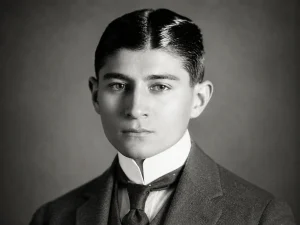
Who Was Franz Kafka?
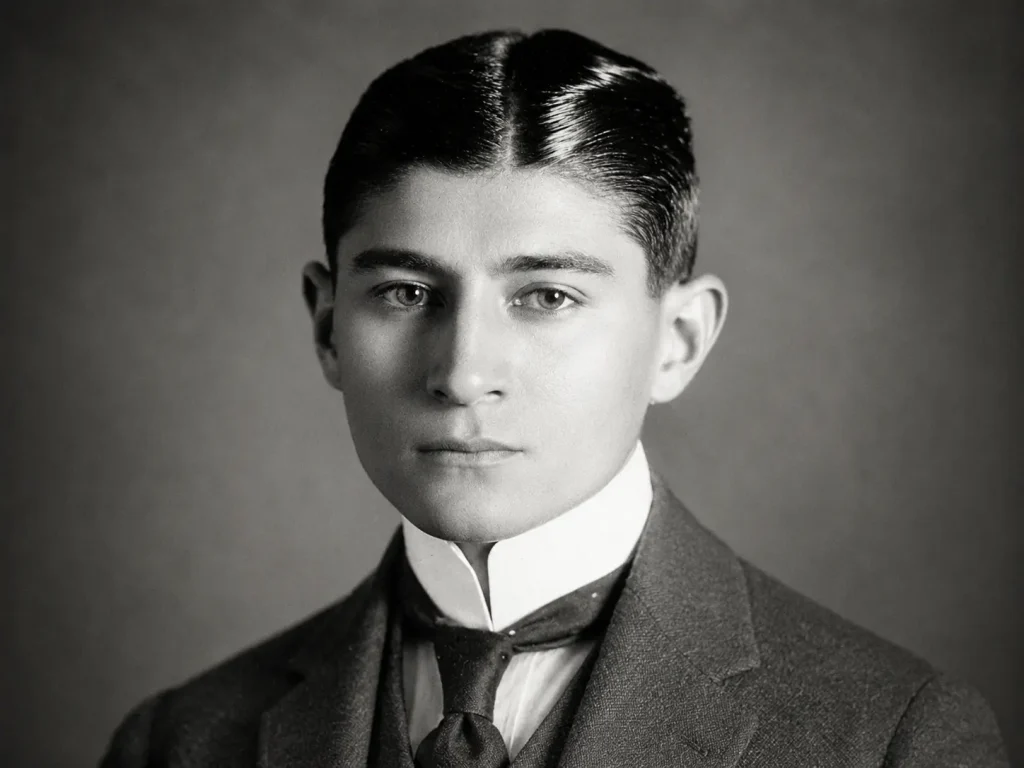
Franz Kafka (1883–1924) was a German-speaking writer born in Prague, then part of the Austro-Hungarian Empire.
Although relatively unknown during his lifetime, he later became one of the most influential literary figures of the twentieth century.
His novels and stories, including The Trial, The Castle, and Metamorphosis, explored themes of alienation, bureaucracy, anxiety, isolation, and the search for meaning in an often incomprehensible world.
The term “Kafkaesque” eventually entered the English language to describe situations that feel absurd, oppressive, confusing, or strangely nightmarish.
Much of Kafka’s writing emerged from his own inner struggles, making his diaries some of the most revealing documents he left behind.
The Historical Context of 1916
When Kafka wrote this diary entry, Europe was in the middle of World War I.
Millions of people were experiencing uncertainty, loss, and social upheaval. Traditional beliefs that had guided previous generations were being questioned. The modern world seemed increasingly unstable.
Kafka himself was living through a period of personal anxiety. He struggled with questions about identity, relationships, work, creativity, and purpose.
His diary became a place where he explored those concerns with unusual honesty.
This brief reflection emerged from that environment of uncertainty and introspection.
The Empty Room as a Metaphor
At first glance, Kafka appears to be describing a simple physical action.
Open the windows.
Remove everything from the room.
Let the wind pass through.
But the room is clearly more than a room.
It represents the inner self.
The furniture, objects, and possessions symbolize the things people use to define themselves: achievements, relationships, routines, ambitions, beliefs, and social roles.
Kafka imagines stripping all of that away.
What remains?
The answer is unsettling.
Why “Not Finding Yourself” Matters
Most people assume that self-discovery involves looking inward.
Kafka presents a darker possibility.
What if the search reveals emptiness?
What if identity is far less solid than people imagine?
His observation reflects a recurring theme throughout his work: the fear that beneath the structures people build around their lives, there may be uncertainty rather than certainty.
This idea can feel uncomfortable because it challenges the comforting belief that everyone possesses a clearly defined and easily discoverable self.
Kafka suggests the search may be far more complicated.
A Reflection on Modern Life
Although written in 1916, Kafka’s words feel strikingly contemporary.
Modern culture often encourages people to build identities around careers, possessions, social status, or online personas.
Yet many individuals continue to experience feelings of emptiness despite achieving success.
People change jobs, move to new cities, end relationships, pursue goals, and reinvent themselves, hoping clarity will follow.
Sometimes it does.
Sometimes the deeper questions remain.
Kafka’s diary entry speaks directly to that experience.
The Psychological Insight Behind the Quote
One reason the passage remains powerful is its psychological accuracy.
Human beings often define themselves through external structures.
When those structures disappear, whether by choice or circumstance, people may experience confusion about who they are.
Retirement, divorce, career changes, loss, and major life transitions can all trigger similar feelings.
Suddenly, familiar markers of identity are gone.
The empty room becomes a reality rather than a metaphor.
Kafka understood this long before modern psychology developed many of the concepts used to describe such experiences.
Why the Quote Endures
Many historical quotations fade because they address specific political or cultural moments.
Kafka’s reflection survives because it touches something universal.
Nearly everyone experiences periods of uncertainty.
Nearly everyone wonders at some point whether they truly understand themselves.
The image of standing in an empty room, searching every corner and failing to find oneself, captures that feeling with extraordinary precision.
It is uncomfortable, but it is also deeply human.
A Timeless Meditation on Identity
More than a hundred years after Franz Kafka wrote these words, they continue to resonate because they confront a question that never disappears: Who are we when everything else is stripped away?
Kafka does not offer an answer.
That may be the point.
His diary entry is not a solution. It is an invitation to reflect.
Perhaps identity is not a fixed object waiting to be discovered in a forgotten corner. Perhaps it is something continuously shaped through experience, relationships, choices, and self-understanding.
Whatever conclusion readers reach, Kafka’s brief observation remains a powerful reminder that the search for oneself is often far more complicated—and far more fascinating—than people expect.