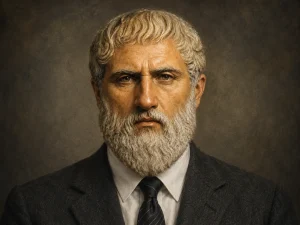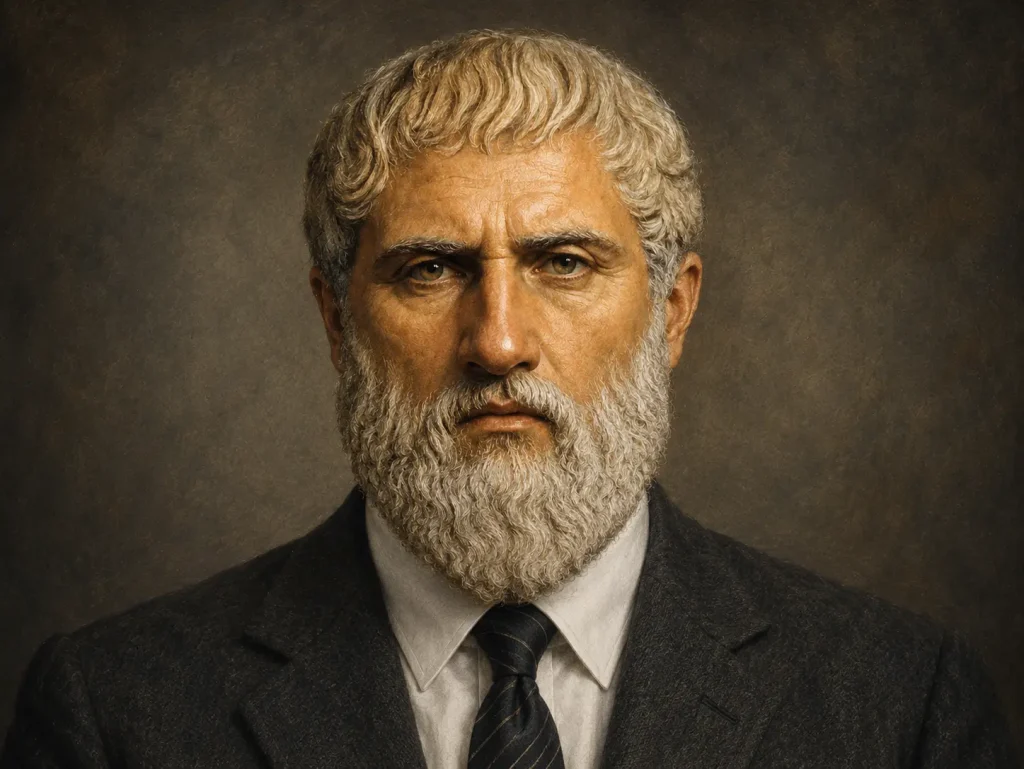
More than 2,300 years ago, young men gathered in the city of Athens to study philosophy, politics, mathematics, and the art of living well. Among the thinkers shaping that world was Plato, a philosopher whose ideas would influence Western civilization for centuries.
Ancient Greece had no streaming services, no radio stations, and no headphones. Yet music was everywhere. It accompanied religious ceremonies, public festivals, military training, and education. To the Greeks, music was not simply entertainment. It was considered a force capable of shaping character itself.
That belief helps explain one of Plato’s most famous observations:
“Music inspires the entire world, gives wings to the soul, fuels the imagination, and brings life and joy to everything that exists.”
More than two millennia later, those words still feel surprisingly relevant.
Who Was Plato?
Plato (c. 428–348 BC) was one of the most influential philosophers in human history. He was a student of Socrates and later became the teacher of Aristotle, creating an intellectual lineage that shaped much of Western thought.
His writings explored justice, education, politics, ethics, knowledge, and the nature of reality itself.
Many of his ideas were recorded in dialogues, where philosophical questions were explored through conversations rather than lectures. Those works continue to be studied in universities around the world.
While Plato is often remembered for his theories about politics and philosophy, he also paid close attention to music and the arts.
Why Music Was So Important in Ancient Greece
To modern audiences, music is often associated with entertainment.
For Plato, it was something much more powerful.
Ancient Greeks believed music influenced emotions, habits, and even moral character. Different musical styles were thought to encourage different behaviors.
Because of this, Plato argued that music should play an important role in education.
He believed that the sounds people heard during childhood could help shape the adults they would eventually become.
In other words, music was not merely something people listened to. It was something that helped form their identity.
What Did Plato Mean by “Gives Wings to the Soul”?
This is perhaps the most memorable part of the quote.
Plato was suggesting that music has the ability to lift people beyond ordinary experience.
A melody can awaken memories long forgotten.
A song can inspire courage during difficult times.
A piece of music can create emotions that seem impossible to express through language alone.
Anyone who has ever heard a song that instantly transported them back to a specific moment understands what Plato meant.
Music has a unique ability to connect emotion, memory, and imagination.
Music and the Power of Imagination
Plato also believed music stimulates the imagination.
Long before psychologists studied creativity, he recognized that music could influence the way people think and perceive the world.
A composer can tell a story without speaking a single word.
A listener can imagine entire landscapes, memories, and possibilities through sound alone.
This creative power explains why music has inspired artists, writers, filmmakers, and innovators throughout history.
Its influence extends far beyond entertainment.
Why Plato’s Idea Still Matters Today
Technology has transformed the way people experience music.
Songs can now be streamed instantly from anywhere in the world. Millions of tracks are available at the touch of a screen.
Yet the emotional impact remains remarkably similar.
People still turn to music during celebrations, heartbreak, loneliness, and moments of reflection.
They still use music to motivate themselves, express identity, and connect with others.
Despite all the technological changes, human nature has not changed nearly as much.
A Timeless Reflection on Human Nature
Plato’s quote endures because it captures something universal.
Human beings do not live by logic alone.
They need imagination.
They need beauty.
They need experiences that help them feel connected to something larger than themselves.
Music remains one of humanity’s most powerful forms of expression because it speaks to those needs directly.
More than two thousand years after Plato wrote about music’s power, his observation continues to resonate. The instruments may have changed. The technology may have changed.
But music still does what Plato believed it could do: inspire the world, lift the soul, and remind people of their capacity to dream.