Most people look at nature and notice details.
A river winding through a field.
Trees swaying in the wind.
Clouds drifting across the sky.
Artists see those things too. But according to Russian painter Isaac Levitan, truly seeing nature requires something more.
Levitan once wrote:
“Nature should not be copied. One must feel its essence and free it from accidents.”
The statement is surprisingly simple, yet it contains a profound idea about art, perception, and even life itself.
More than a century after he wrote those words, they continue to challenge the way people think about beauty and reality.
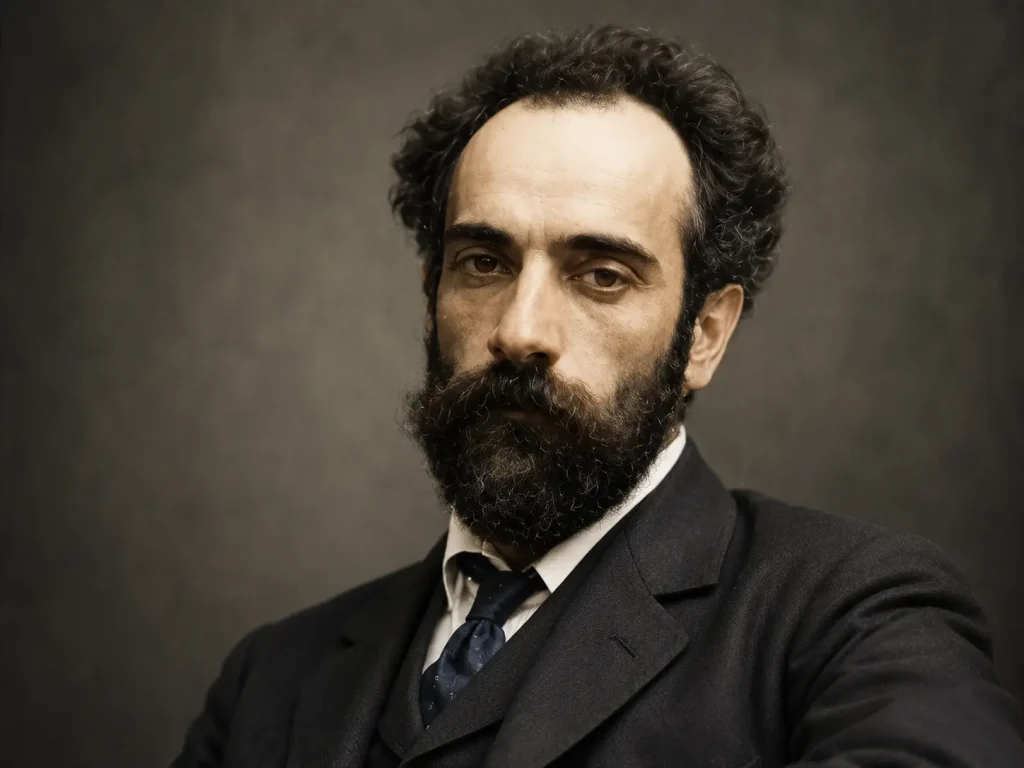
Who Was Isaac Levitan?
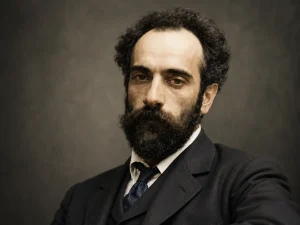
Isaac Levitan (1860–1900) was one of Russia’s greatest landscape painters.
Born into a poor Jewish family, he spent much of his life overcoming hardship and discrimination. Despite these obstacles, he became one of the most celebrated artists of his generation.
Levitan was famous for paintings that captured the emotional atmosphere of the Russian countryside.
His subjects were often ordinary.
A quiet river.
An empty road.
A field beneath a gray sky.
Yet viewers frequently described his paintings as deeply moving. He had a remarkable ability to transform familiar scenes into reflections on loneliness, peace, hope, and memory.
The World That Shaped His Art
Levitan lived during a period when Russian artists were questioning traditional ideas about painting.
For centuries, many painters had focused on technical perfection and accurate representation.
Levitan respected technical skill, but he believed great art required something deeper.
He spent countless hours observing nature, not merely to record what he saw but to understand what he felt.
The changing seasons, shifting light, and endless Russian landscapes became sources of inspiration.
His goal was never simple imitation.
His goal was understanding.
What Did Levitan Mean by “Do Not Copy Nature”?
At first, the statement sounds strange.
Isn’t painting supposed to reproduce reality?
Levitan would have answered no.
A camera can record details with extraordinary precision. An artist has a different responsibility.
The artist must discover what matters most within a scene.
A landscape contains thousands of details, but not every detail carries meaning.
According to Levitan, merely copying what appears before your eyes can sometimes hide the deeper truth.
The challenge is to move beyond appearance and uncover essence.
The Importance of Essence
The word “essence” sits at the center of Levitan’s philosophy.
When he looked at a forest, he did not simply see trees.
When he looked at a river, he did not simply see water.
He searched for something less visible.
A mood.
An emotion.
A feeling.
A sense of stillness or longing.
These qualities cannot be measured, yet they are often what people remember most.
Many of Levitan’s landscapes feel almost alive because they communicate emotions rather than merely displaying scenery.
His paintings invite viewers to experience nature rather than simply observe it.
What Are the “Accidents” of Nature?
The second half of the quote is equally important.
Levitan argues that artists should free nature from accidents.
By accidents, he meant temporary details that distract from deeper meaning.
Imagine standing in a beautiful field at sunset.
Perhaps there is a broken fence, a random object, or some small imperfection that draws attention away from the larger atmosphere of the scene.
Those details are real.
But they may not express the true character of the landscape.
For Levitan, the artist’s role was to remove distractions and reveal what is essential.
In this sense, art becomes a process of clarification.
It helps people see more clearly.
A Lesson Beyond Art
Although Levitan was speaking about painting, his insight extends far beyond the canvas.
People often judge situations based on appearances.
They focus on isolated moments, temporary problems, or superficial details.
As a result, they sometimes miss what truly matters.
A friendship can be reduced to a misunderstanding.
A person can be defined by a single mistake.
An experience can be remembered for an inconvenience rather than its deeper significance.
Levitan’s words encourage a different perspective.
Look beyond the surface.
Search for the essence.
Do not allow temporary distractions to obscure lasting truths.
Why This Idea Still Matters Today
Modern life moves quickly.
People scroll through endless images, videos, headlines, and opinions.
First impressions often become final judgments.
Surface-level information dominates attention.
Levitan’s philosophy offers an alternative.
He reminds people that understanding requires patience.
The most meaningful truths are rarely found in the first glance.
Whether observing nature, evaluating another person, or reflecting on life itself, deeper insight often emerges only after careful attention.
A Timeless Reflection on Seeing Clearly
More than a century after Isaac Levitan painted the landscapes that made him famous, his words continue to resonate.
His quote is not merely advice for artists.
It is a philosophy of perception.
It suggests that reality contains layers hidden beneath appearances and that genuine understanding requires looking beyond what is immediately visible.
The world is full of details competing for attention.
Levitan believed wisdom comes from distinguishing between what is temporary and what is essential.
That lesson remains just as valuable today as it was in nineteenth-century Russia.
Nature should not be copied, he argued.
It should be understood.
And perhaps the same is true of life itself.